
How to Seamlessly Transition Between Seasons in Stardew Valley
Stardew Valley, the farming simulation game that has captured the hearts of millions, offers a rich and detailed world. One important aspect that significantly impacts gameplay is the shift from one season to another. Transitioning between seasons can be a tricky endeavor, especially when it comes to maintaining your farm. You might find yourself back at square one with your soil turning back into untilled land, filled with weeds, wood, and rocks. This guide explores methods to transition smoothly between seasons without the hassle of re-tilting and re-fertilizing your soil.
The Basics: What Happens During Season Change?
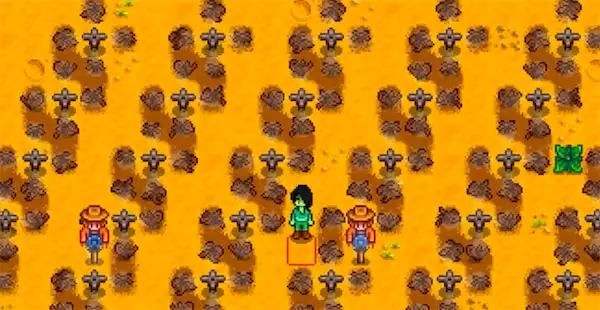
When you switch from one season to the next, most of the tilled land on your farm reverts to an untilled state if it is empty. This not only forces you to till the soil once more but also means you have to deal with the mess of weeds, wood, and rocks that can appear. This can become an incredibly time-consuming process, particularly if you have a large farm.
Types of Seasonal Protection
There are two types of protection you can give to your soil:
- Soil Protection: Simply ensures that the land remains tilled.
- Fertilizer Protection: Maintains the soil’s fertilized state along with tilling.
The Underlying Principle
The principle behind this is straightforward. If a crop is planted on the soil during the season change, the land will not revert to its untilled state. Two scenarios may then arise:
- Scenario 1: If the crop cannot survive into the new season, it will wither. In this case, you can use a scythe to remove the withered crops, and you’ll have tilled soil ready for the new season.
- Scenario 2: If the crop can continue to grow in the new season, not only will the soil remain tilled, but any applied fertilizer will also be preserved.
Common Strategies: The Strawberry-Hops-Pumpkin Rotation
A popular strategy involves planting Strawberries in the spring, followed by Hops in the summer, and finally Pumpkins in the fall. This ensures your soil remains tilled throughout the year. Both Strawberries and Hops are continuously harvestable crops, serving dual purposes as profitable and soil-protecting plants.
Budget-Friendly Options
If you’re looking for a budget-friendly spring crop, use an actual seed such as a Tulip Bulb, which costs 20g at Pierre’s. Daffodil is spring forage and has no plantable “Daffodil Seed.” For spring-to-summer transitions, Rice Shoots can also be useful when their harvest timing fits.
Fertilizer-Specific Strategies
When it comes to preserving fertilizer, things get trickier. Coffee beans are an option but require extra labor to chop down, and it becomes cumbersome quickly. One can use a pickaxe; however, be careful not to ruin the tilled land accidentally.
Advanced Techniques: Wheat and Other Methods
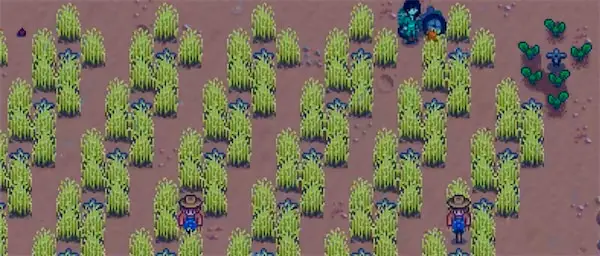
Wheat is perhaps the most cost-effective and practical choice for both soil and fertilizer protection when transitioning from summer to fall. It’s cheap (10 gold per seed) and can grow in both summer and fall, making it an excellent choice.
Seasonal Tricks: Using Cacti and Fiber Seeds
Do not use Cactus Seeds for a normal outdoor farm transition. Local crop rules reject them outdoors unless the location context is Ginger Island; they are intended for the Greenhouse, indoor pots or Ginger Island rather than as disposable farm soil protection.
Conclusion
Seasonal transitions in Stardew Valley require a fair amount of planning and strategic farming. Using the methods discussed, including crop rotations like the Strawberry-Hops-Pumpkin strategy, low-cost alternatives, and special techniques involving wheat and cacti, can save you time, energy, and resources. Happy farming!
Best winter-to-spring option: after completing Linus’s Community Cleanup special order, craft Fiber Seeds from Mixed Seeds, Sap and Clay. Fiber grows in all four seasons without watering. Plant it over tilled and fertilized soil before winter ends, leave it standing through Winter 28, then harvest on Spring 1 to preserve the tilled plots and eligible fertilizer for immediate spring planting.
With proper planning and smart choices, you can streamline your farming efforts and make the most out of each season in Stardew Valley. This guide aims to equip you with the knowledge and tips needed to ensure that your farm thrives year-round, no matter the season.