Melon Stardew Valley Guide: Growing, Finding, and Maximizing Your Crop
Melons are not just another crop in Stardew Valley; they’re a fruit loaded with opportunities for farming, crafting, and trading. Whether you’re a beginner or a seasoned farmer, you may find yourself with questions about these juicy fruits. In this article, we cover everything from alternative methods of obtaining melons to achieving that elusive gold quality.
Different Ways to Obtain Melons
Traditional Farming
Melons grow from Melon Seeds in 12 days. In the standard Community Center, the Summer Crops Bundle needs one normal-quality Melon. The Quality Crops Bundle offers five gold-quality Melons as one of four possible crop sets; completing that standard bundle requires any three of the four sets. Remixed bundles can differ.
Exploiting Game Mechanics
An unconventional but effective method involves either naming your character or an animal “[254]”. When villagers mention the special name in dialogues, you receive a melon!
Shopping Around
If you’re in a rush, keep an eye out for the traveling purple cart that shows up occasionally. There’s a chance you might find melons there. Another option is to wait until next year or visit Pierre’s shop.

Growing Melons Successfully
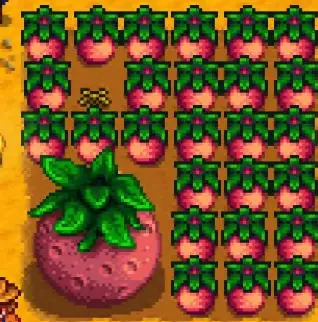
Melons take 12 days to grow, but how do you get them to grow into giant crops? The key factors are:
- Planting in a 3×3 grid: This maximizes the chance of growing a giant melon.
- Keeping them watered: Whether through sprinklers, retaining soil, or your trusty watering can.
- Waiting: Leaving the matured melons in the ground increases the chances of them fusing into a giant melon.
Note: The Watering Can does not harvest a mature Melon. Harvesting uses the separate action/interact input. Leave a mature 3×3 block in place and keep its soil watered so the game can continue checking for a Giant Melon.
Tips for Gold Quality Melons
Use fertilizer before planting and raise Farming skill to improve quality odds. Keep at least five gold-quality Melons if you plan to use Melon as one of the Quality Crops Bundle sets; a normal Melon cannot fill those five gold slots. Separately, reserve one ordinary Melon for the Summer Crops Bundle.
Melons and Crafting
Melons aren’t just for eating or selling; they can also be used in crafting. Use them with cloth in the Sewing Machine to create dyeable shorts. You can also dip them in the red dye pot at Emily’s and Haley’s house to alter their color.
Melons in Relation to Other Crops
When compared to other crops, like blueberries, melons might not be the most profitable option, but they offer versatility. They can be transformed into giant crops or used for crafting, which adds another layer of strategy to your Stardew Valley gameplay.
The Aesthetic Appeal: Pink Melons?
You might have noticed that melons in Stardew Valley are pink. While there’s no in-game explanation, fans have various theories, from elvish riddles to simple aesthetic choices.
Community Questions
Can You Grow Melons Vertically on Trellises?
While the game doesn’t offer this feature, the idea sounds like a fun mod concept for vertical farming enthusiasts.
How Often Should Melons be Rotated?
Rotation isn’t a feature in Stardew Valley, but if it were, consulting with melon-farming cousins could yield some interesting in-game tactics.
What about Allergies?
If you’re mildly allergic to musk melons in real life, rest assured that Stardew Valley melons are entirely virtual and pose no allergic risks.
Conclusion
Melons in Stardew Valley offer a rich experience, from the challenge of growing giant crops to their use in crafting and trade. Whether you’re new to the game or a seasoned pro, understanding the dynamics of melon farming can add a new layer of enjoyment to your Stardew Valley experience.